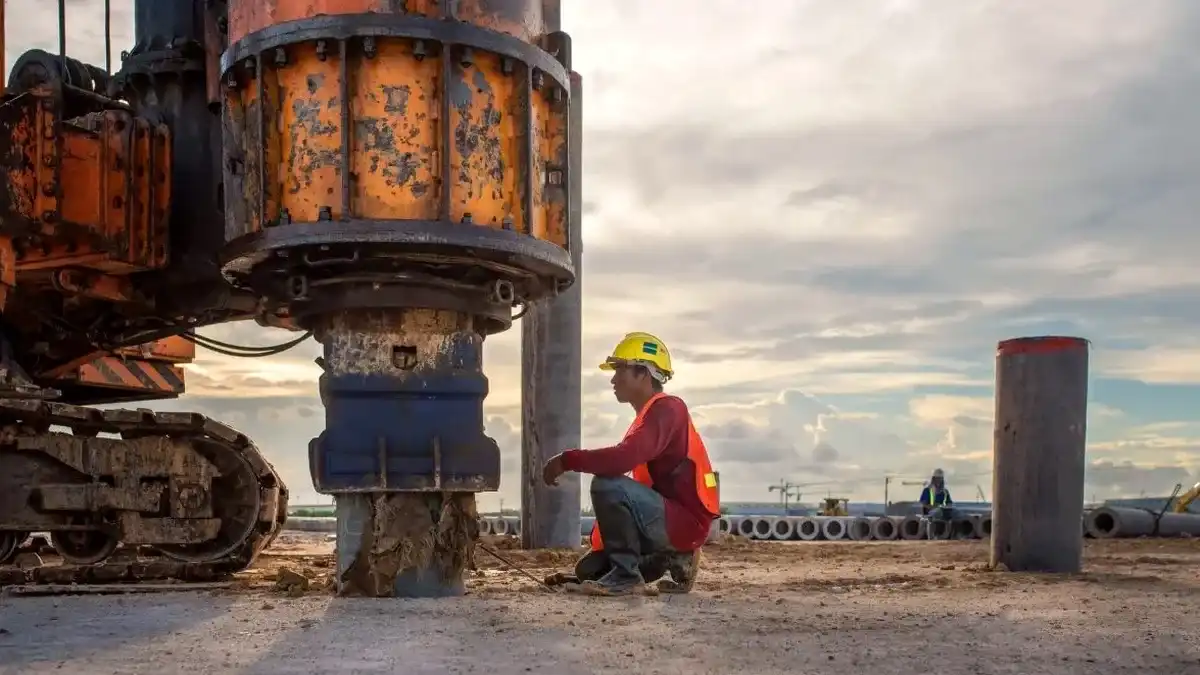
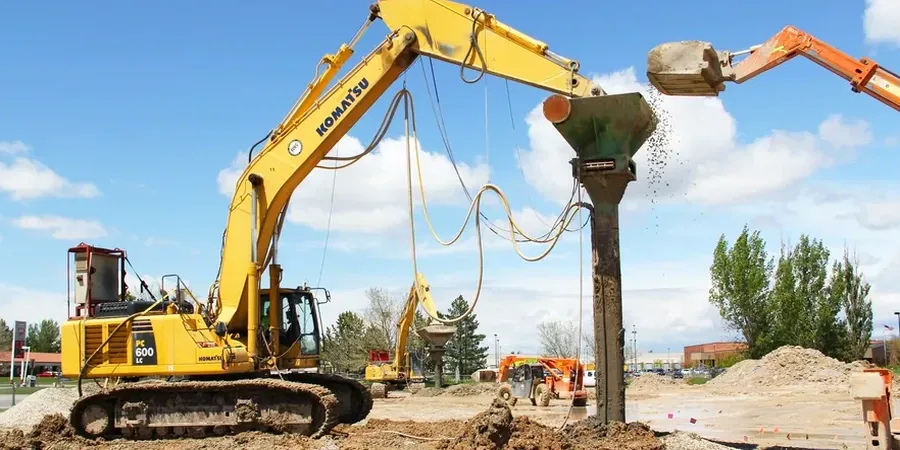
The first thing you hear on a vibrocompaction job in Tauranga is the rhythm of the SVR rig’s vibrator, usually an electric unit suspended from a crawler crane, working its way down through loose sands near the harbour edge. In our experience, the local geology—dominantly the Tauranga Group pumiceous sands and silts deposited by successive volcanic episodes from the Taupo Volcanic Zone—responds well to deep vibratory compaction, but the design phase must account for the crushable nature of the pumice particles. This isn’t a uniform sand you can treat with a textbook grid; we adjust probe spacing and dwell time based on cone resistance profiles from nearby CPT testing campaigns to avoid particle breakage while still hitting the relative density targets the structural engineer needs under NZS 3404. Tauranga’s rapid growth around Papamoa, Bethlehem, and the Mount means more buildings are going onto young Quaternary sediments and engineered fills that simply demand a tailored vibro design.
Effective vibro design in Tauranga hinges on accepting that pumice sands crush under high vibration energy, so we target densification through particle rearrangement rather than over-compaction.