GEOTECHNICAL ENGINEERING1
TAURANGA
HomeLaboratoryTriaxial test

Advanced Triaxial Testing in Tauranga – Shear Strength Analysis Under Site-Specific Conditions

Practical geotechnics, field-tested.

LEARN MORE

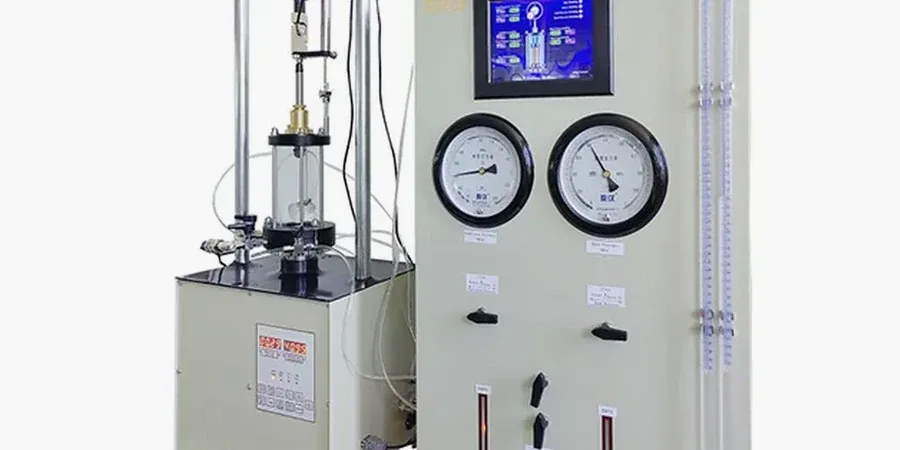
Compliance with NZS 3404 and the NZGS soil mechanics guidelines is non-negotiable for any serious earthworks or foundation design in the Bay of Plenty. The triaxial test provides the most reliable measurement of effective stress parameters, which are essential when designing on the sensitive volcanic ash soils and soft marine sediments that dominate the Tauranga peninsula. Rather than relying on empirical correlations that often fall short in the region's heterogeneous deposits, a properly executed triaxial test delivers direct measurements of the soil's friction angle and cohesion under controlled laboratory conditions. This is particularly relevant when a CPT test identifies complex interbedded strata where drained versus undrained behavior must be clearly defined, or when a slope stability analysis demands high-confidence strength envelopes to model cut faces in the weathered ignimbrite common across the Kaimai foothills.

The difference between a drained and undrained triaxial test in Tauranga's volcanic soils can shift the allowable bearing pressure by over 40%—a margin no project budget should ignore.
Our service areas

Methodology and scope

The ash-derived pumiceous silts found across suburbs like Otumoetai and Matua present a unique geotechnical challenge: their internal fabric can collapse under load, producing strength parameters that conventional index testing misses entirely. A triaxial test configured with pore pressure measurement captures this collapse mechanism by tracking effective stress paths through the critical state framework. Our laboratory follows the multistage technique outlined in the NZGS guidelines, allowing us to derive a complete Mohr-Coulomb envelope from a single specimen when material is limited. For liquefaction-prone zones near the Tauranga Harbour margins, a cyclic triaxial test becomes indispensable, as the loose estuarine sands mapped in areas like Judea and Gate Pa require direct measurement of excess pore pressure generation. The interaction between this testing and field-derived SPT drilling data creates a solid geotechnical model, where blow counts are calibrated against lab-measured friction angles rather than generic published correlations that often underestimate the strength of locally cemented horizons.
Advanced Triaxial Testing in Tauranga – Shear Strength Analysis Under Site-Specific Conditions
Technical reference — Tauranga

Local ground factors

Tauranga sits at just 5 metres above mean sea level across much of its urban footprint, with a groundwater table that fluctuates seasonally within 1.5 metres of the surface. The 1987 Edgecumbe earthquake, though centered 60 kilometres away, generated amplified ground motions in the Tauranga Basin that triggered lateral spreading along the harbour edge—a stark reminder that undrained loading conditions govern the seismic response of saturated coastal soils. A total stress triaxial test that ignores pore pressure buildup will overpredict strength and underpredict deformation, producing foundation designs that are unconservative for the actual site conditions. The NZGS Module 4 guidelines explicitly recommend consolidated-undrained testing with pore pressure measurement for all critical infrastructure on the Tauranga alluvial plain, because the slow dissipation of excess pressure in the low-permeability volcanic clay layers can delay failure by weeks after the shaking stops.

Need a geotechnical assessment?

Reply within 24h.

Email: contact@geotechnical-engineering1.co

Reference standards

NZS 4402:1986 Methods of testing soils for civil engineering purposes – Soil strength tests, NZS 3404 Parts 1 & 2:1997 Steel structures (referenced for foundation design input parameters), NZGS Guideline for the Field Classification and Description of Soils (2022 revision)

Typical values

ParameterTypical value
Specimen diameter50 mm or 70 mm (undisturbed)
Consolidation stagesIsotropic or anisotropic (K0)
Shearing rate (drained)0.005–0.05 mm/min (pore pressure dissipation verified)
Pore pressure measurementMid-plane electronic transducer (±0.1 kPa resolution)
Effective cohesion (c') range0–45 kPa (typical for local residual soils)
Effective friction angle (φ') range26°–38° (variable with density and pumice content)
Cyclic test frequency0.1–1 Hz (simulating seismic loading per NZS 1170.5)

Quick answers

How much does a triaxial test cost in Tauranga?

The cost for a single triaxial test in our Tauranga lab ranges from NZ$2,700 to NZ$4,230 depending on the test configuration. A standard CU triaxial with three effective consolidation stresses starts at the lower end, while cyclic liquefaction testing or K0-consolidated tests with local strain measurement fall at the upper end. The price includes specimen extrusion, saturation, consolidation, shearing, and a full interpretive report with Mohr-Coulomb parameters and stress path plots.

What is the minimum number of triaxial tests recommended for a Tauranga site investigation?

The NZGS guidelines recommend a minimum of three triaxial tests per geologically distinct unit encountered on a site. For a typical Tauranga residential subdivision on variable ground—say, interbedded pumiceous silt and estuarine sand—we would normally run three CU tests on the cohesive silt and three cyclic tests on the saturated sand to bracket the range of strength values. Statistical reliability increases significantly with five or more tests per unit, which is our standard recommendation for commercial structures over two storeys.

How do you obtain undisturbed samples for a triaxial test in Tauranga's soils?

Undisturbed sampling in Tauranga requires careful technique because the volcanic soils are often sensitive and prone to disturbance. We use thin-walled Shelby tubes pushed hydraulically from a drill rig for cohesive silts and clays below the water table. For the pumiceous sands, block sampling from test pits or frozen sampling techniques may be needed to preserve the in-situ fabric. The tube samples are sealed with wax immediately upon extrusion in the field and transported to our lab in Tauranga in insulated containers to maintain field moisture content.

What is the difference between a triaxial test and a direct shear test for foundation design?

A triaxial test controls both the confining pressure and the drainage conditions throughout the test, allowing measurement of pore water pressure during undrained shearing—a capability a direct shear box does not have. This is critical in Tauranga because the high water table means most foundation soils are saturated and will respond in an undrained manner during earthquake loading. The triaxial test also imposes a more uniform stress state on the specimen and measures volumetric strain during drained shearing, giving engineers the full set of parameters needed for advanced constitutive models used in finite element analysis.

Location and service area

We serve projects in Tauranga and surrounding areas.

View larger map