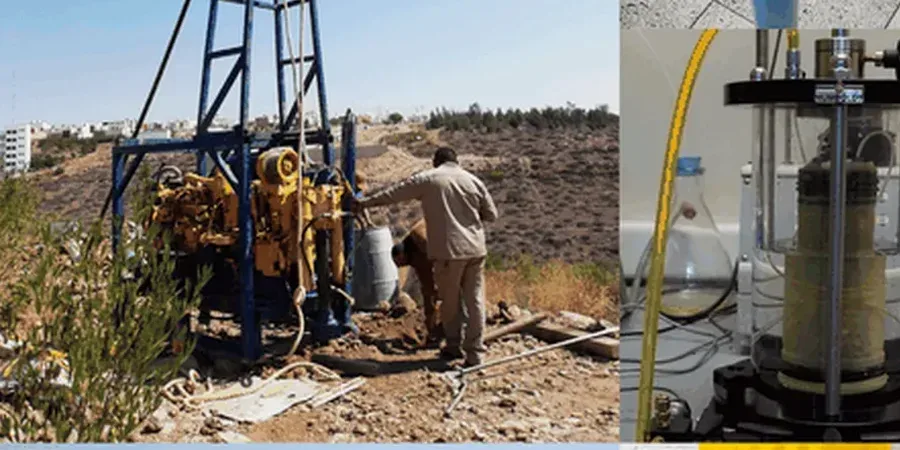
The New Zealand Geotechnical Society (NZGS) guidelines and NZS 3404 standards set a high bar for seismic site assessment, and nowhere is this more critical than in Tauranga. The city sits on a complex geological patchwork of Holocene estuarine sediments, volcanic ash layers from the Taupo Volcanic Zone, and buried paleo-channels beneath the harbour margins. We run seismic tomography lines here weekly, and the velocity contrasts between the loose Tauranga Group sands and the underlying welded ignimbrite are often sharper than what you would expect from a standard borehole log alone. For projects near the port or out towards Bethlehem, a CPT test can be integrated with refraction data to calibrate shear wave velocities against tip resistance, giving a continuous subsurface model rather than relying on isolated point data. Our team operates a 24-channel seismograph with both P-wave and S-wave acquisition capabilities, ensuring the final tomographic inversion matches the stratigraphy we know from decades of local drilling experience.
Seismic velocity inversions—where a stiff layer overlies softer material—are common in Tauranga's layered pumice deposits and cannot be resolved by standard refraction alone.