GEOTECHNICAL ENGINEERING1
TAURANGA
HomeSlopes & WallsRetaining wall design

Retaining Wall Design in Tauranga: Geotechnical Logic for Coastal Terrain

Practical geotechnics, field-tested.

LEARN MORE

Tauranga’s coastal setting introduces a persistent challenge for retaining wall design: aggressive marine humidity combined with residual volcanic soils. The weathered tephra layers common across the Papamoa and Mount Maunganui corridors hold moisture unpredictably, creating lateral pressures that generic designs simply ignore. A retaining wall built here without local geotechnical input often fails within the first five years. We correlate Atterberg limits data from site-specific boreholes to understand how these silty clays will behave under seasonal saturation. From the harbour edge to Bethlehem’s rolling terrain, the design must account for pore-water pressure buildup behind the wall face. Our team applies NZGS guidelines to model the long-term drained and short-term undrained conditions that govern stability in the Bay of Plenty.

Effective retaining wall design in Tauranga hinges on controlling groundwater, not just resisting soil mass.

Our service areas

Methodology and scope

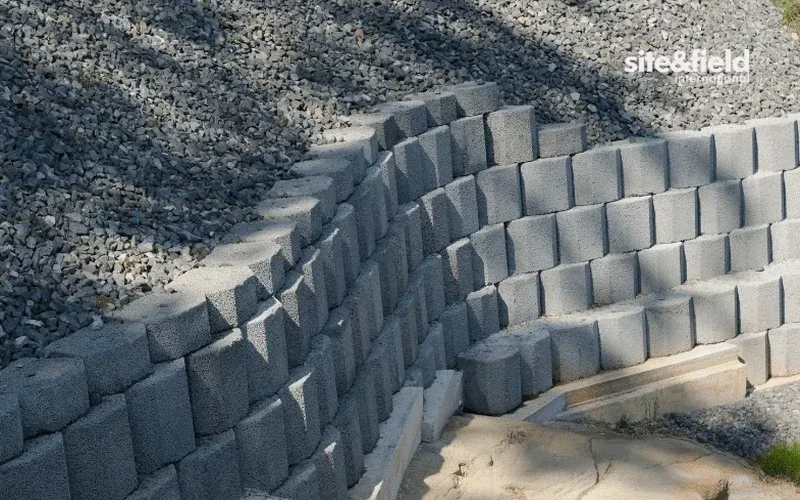
NZS 3404 and NZS 4203 form the structural backbone, but the critical geotechnical parameters come directly from the NZGS soil description procedures. In Tauranga, the presence of halloysite-rich clays demands careful interpretation of strength test results. A standard triaxial test on a remolded sample can be misleading if the soil’s natural fabric is destroyed. We design gravity walls, cantilevered reinforced concrete walls, and mechanically stabilized earth blocks with an understanding of how these local materials degrade over time. The triaxial consolidated-undrained test with pore pressure measurement provides the effective stress parameters essential for calculating active and passive earth pressures. Embedment depth in the underlying ignimbrite or alluvial gravels is verified against liquefaction potential, a factor that too many designers overlook in the region. Drainage detailing—using geotextiles and gravel chimneys—is mandatory, not optional.
Retaining Wall Design in Tauranga: Geotechnical Logic for Coastal Terrain
Technical reference — Tauranga

Local ground factors

A 2.5-meter cantilever wall on a residential section in Matua started tilting only 18 months after construction. The investigation revealed the culprit: the original designer treated the underlying weathered ignimbrite as impermeable. It wasn’t. Perched groundwater built up behind the wall during winter, exerting hydrostatic pressures far beyond the design assumptions. The wall lacked a proper heel drain. We see this pattern frequently along the Tauranga Harbour margins where fluctuating water tables are the norm. A retaining wall positioned without a solid masw survey to confirm bedrock depth risks differential settlement and eventual cracking. The cost of remediation invariably exceeds the cost of a proper geotechnical investigation before the first auger hits the ground.

Need a geotechnical assessment?

Reply within 24h.

Email: contact@geotechnical-engineering1.co

Watch the video

Reference standards

NZS 3404: Steel Structures Standard, NZS 4203: General Structural Design and Design Loadings, NZGS Guidelines for Retaining Wall Design

Typical values

ParameterTypical value
Design life50–100 years (NZS 3404)
Seismic zone factor (Z)0.21 (Tauranga City)
Backfill typeFree-draining granular (NZS 4402)
Drainage systemGeocomposite or gravel chimney
Minimum embedment≥ 0.6 m below ground surface
Surcharge loadingTraffic or adjacent footing loads

Quick answers

How much does retaining wall design cost for a standard Tauranga section?

Geotechnical investigation and design for a typical residential retaining wall in Tauranga ranges from NZ$2.000 to NZ$6.210. The scope includes site investigation, laboratory testing, stability calculations, and a PS1 producer statement.

What soil tests are essential before designing a retaining wall in Tauranga?

We require Atterberg limits to classify the volcanic ash soils, a consolidated-undrained triaxial test for strength parameters, and a particle size distribution analysis to select appropriate backfill and filter materials.

Is a producer statement mandatory for retaining walls in Tauranga?

Yes, Tauranga City Council requires a PS1 design producer statement for walls over 1.5 meters high. Our designs include the necessary construction monitoring observations for the PS4 sign-off.

How does the coastal environment affect retaining wall durability in Tauranga?

The marine atmosphere accelerates steel corrosion. We specify increased concrete cover to reinforcement and consider using galvanized or stainless steel components for walls within 500 meters of the coast.

Location and service area

We serve projects in Tauranga and surrounding areas.

View larger map