GEOTECHNICAL ENGINEERING1
TAURANGA
HomeIn-Situ TestingField permeability test (Lefranc/Lugeon)

Field Permeability Testing in Tauranga (Lefranc & Lugeon Methods)

Practical geotechnics, field-tested.

LEARN MORE

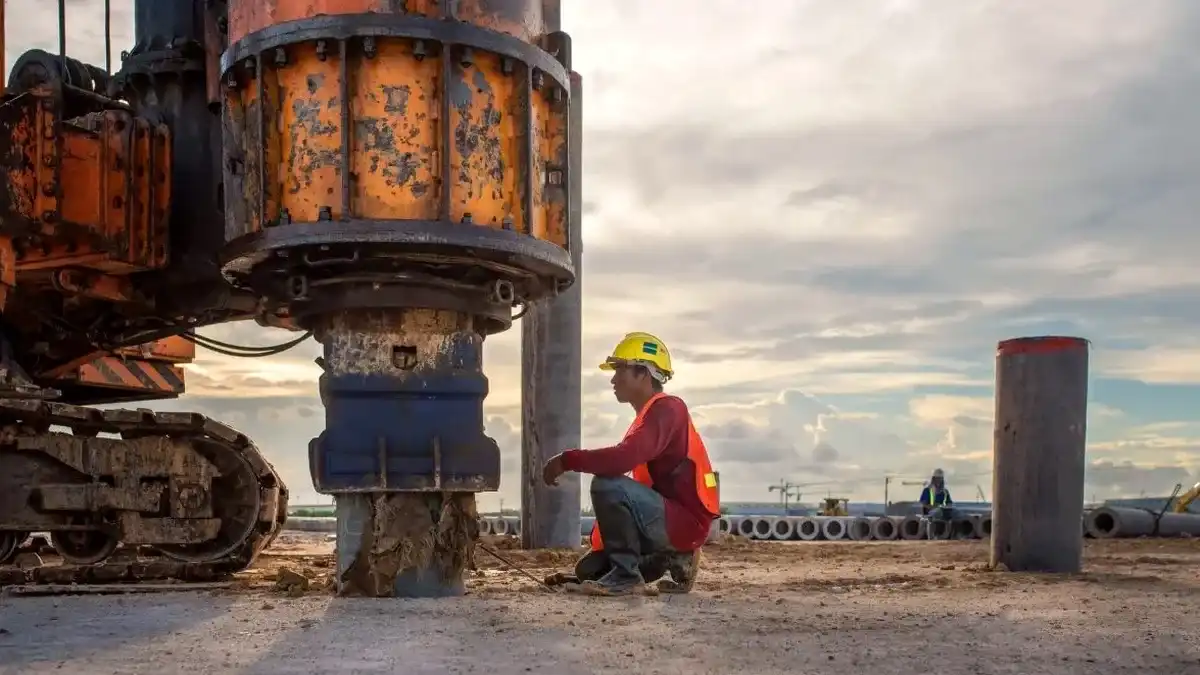
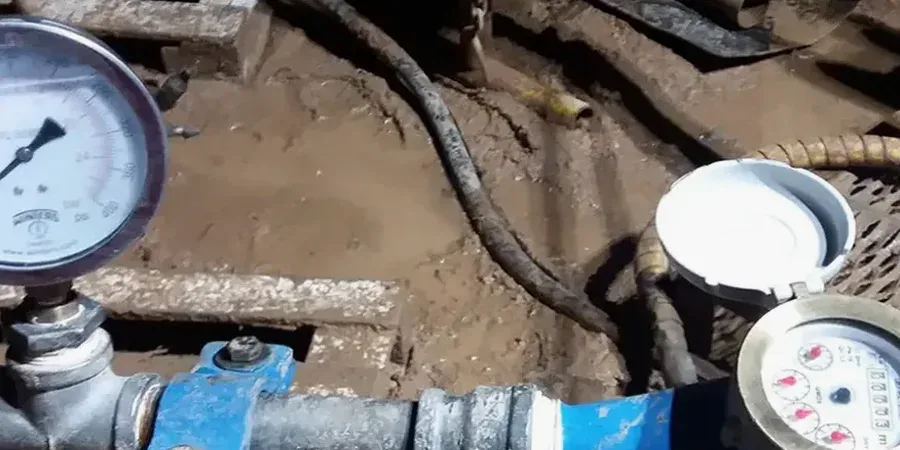
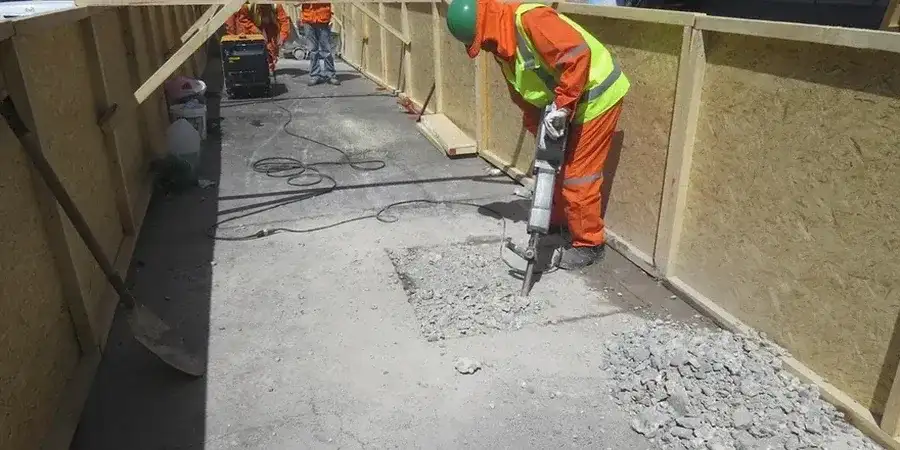
Setting up a Lugeon packer assembly in Tauranga's volcanic terrain requires careful attention to borehole stability. The variable rhyolitic tuffs and ignimbrite flows underlying much of the city create distinct hydrogeological compartments that standard percolation tests simply cannot characterise. Our technical team runs the double-packer system down to the target test interval, sealing off the section with inflatable rubber elements before applying staged water pressure through a calibrated flow meter. For the shallower alluvial deposits near the Tauranga Harbour shoreline, we switch to the Lefranc method using a slotted standpipe driven into the bottom of test pits or boreholes. The constant-head or falling-head procedure captures the true hydraulic conductivity of the Tauranga soil profile, which is essential when designing dewatering systems for excavations that encounter the high groundwater table typical of this coastal city. Every test run feeds directly into the geotechnical model, providing engineers with the site-specific permeability values needed to predict seepage rates and pore pressure dissipation.

A properly executed Lugeon profile in fractured ignimbrite reveals the flow regime that a single lab test on a 100 mm core sample will always miss.
Our service areas

Methodology and scope

Comparing the estuarine clays of the Tauranga CBD with the weathered ignimbrite slopes of Pyes Pa reveals two entirely different permeability challenges, often separated by less than 10 kilometres. The low-lying commercial district, built on Holocene marine sediments, exhibits hydraulic conductivities in the range of 1×10⁻⁹ to 1×10⁻⁷ m/s, meaning drainage is slow and prolonged dewatering is required for any excavation deeper than 2 metres. Out west toward the Kaimai foothills, the same depth might encounter fractured, moderately weathered ignimbrite with Lugeon values exceeding 30, indicating a rock mass where water moves freely through open discontinuities. The Lefranc test handles the soil scenario with a simple falling-head approach, measuring the time it takes for water in the standpipe to drop as it dissipates into the surrounding material. For the rock mass, the Lugeon method applies five pressure stages, revealing not just the average conductivity but also the hydraulic behaviour of the fractures under varying heads—dilation, washout, or laminar flow. These parameters feed directly into the slope stability analysis required for hillside subdivisions across Tauranga, where pore pressure distribution in jointed rock governs the factor of safety during prolonged wet periods.
Field Permeability Testing in Tauranga (Lefranc & Lugeon Methods)
Technical reference — Tauranga

Local ground factors

The contrast between Tauranga's humid maritime climate and its free-draining volcanic uplands creates a permeability paradox that catches out unprepared design teams. Summer rainfall events can deliver 120 mm in a single day, saturating the near-surface pumiceous layers, yet the underlying fractured ignimbrite may still transmit water rapidly through joint networks. Misjudging this dual-flow regime leads to two common failures in Tauranga: excavation flooding during wet-season construction on the Matapihi peninsula, where the shallow groundwater responds almost instantly to rainfall, and unexpected dry-weather ingress through rock joints in hillside cuts around Bethlehem. A single Lefranc test in a borehole tells you the soil permeability at that depth; a series of Lugeon tests at 5-metre intervals maps the fracture conductivity profile along the entire hole. Without this vertical resolution, a dewatering design for a Tauranga basement excavation becomes guesswork. The New Zealand Geotechnical Society guidelines explicitly recommend in-situ permeability testing when groundwater control is critical to construction safety, particularly in the complex volcanic stratigraphy that characterises the Bay of Plenty region.

Need a geotechnical assessment?

Reply within 24h.

Email: contact@geotechnical-engineering1.co

Reference standards

NZS 4402:1986 Methods of testing soils for civil engineering purposes, BS EN ISO 22282-2:2012 Geotechnical investigation and testing — Geohydraulic testing — Part 2: Water permeability tests in a borehole using open systems, BS EN ISO 22282-3:2012 Geotechnical investigation and testing — Geohydraulic testing — Part 3: Water pressure tests in rock, New Zealand Geotechnical Society (NZGS) guidelines for in-situ testing

Typical values

ParameterTypical value
Test standard (soil)NZS 4402:1986, BS EN ISO 22282-2:2012
Test standard (rock)BS EN ISO 22282-3:2012, USBR 6525
Test interval (Lugeon)3.0 to 5.0 metres typical
Maximum test pressureUp to 1 MPa (10 bar), site-dependent
Measured conductivity range1×10⁻⁹ to >1×10⁻⁴ m/s
Pressure stages per interval5 (low–medium–high–medium–low)
Borehole diameter (Lugeon)Minimum HQ (96 mm) for double packer

Quick answers

What is the difference between a Lefranc test and a Lugeon test?

The Lefranc test measures hydraulic conductivity in soil using a simple open borehole or standpipe, applying water under a constant or falling head. It is suited to unconsolidated materials like the Tauranga Group sediments. The Lugeon test is specifically for rock: a double packer isolates a section of borehole, and water is injected under controlled pressure in five stages. The resulting Lugeon value characterises fracture flow and the hydraulic behaviour of the rock mass under different heads—critical for the ignimbrite and greywacke formations common around Tauranga.

When is in-situ permeability testing required instead of lab permeability tests?

Lab tests on small samples cannot capture the influence of fractures, joints, or macro-structure that dominate the permeability of rock masses. In Tauranga's fractured ignimbrite, a lab test on an intact core plug might indicate near-zero permeability, while the in-situ Lugeon value could exceed 50 Lugeon units. NZGS guidelines and NZS 4402 direct practitioners toward in-situ methods whenever groundwater flow is governed by discontinuities or when representative sampling of coarse, heterogeneous materials is impractical.

How much does a field permeability test cost in Tauranga?

For a typical investigation programme in the Tauranga area, field permeability testing ranges from NZ$1,140 to NZ$1,650 per test interval, depending on depth, access conditions, and whether the test is a Lefranc (soil) or Lugeon (rock) procedure. Mobilisation, borehole drilling, and reporting are additional. A site-specific quotation is always provided after reviewing the project location and ground conditions.

How long does a Lugeon test take to complete on site?

A single Lugeon test interval, including packer inflation, five pressure stages of 10 minutes each, deflation, and repositioning, typically takes 90 to 120 minutes. In Tauranga's ignimbrite, where borehole walls can be irregular due to pumice clasts and lithic fragments, allowing additional time for packer seating ensures a reliable seal and valid test data. A full profile of five intervals across a 25-metre rock section usually requires one full field day.

Location and service area

We serve projects in Tauranga and surrounding areas. More info.

View larger map