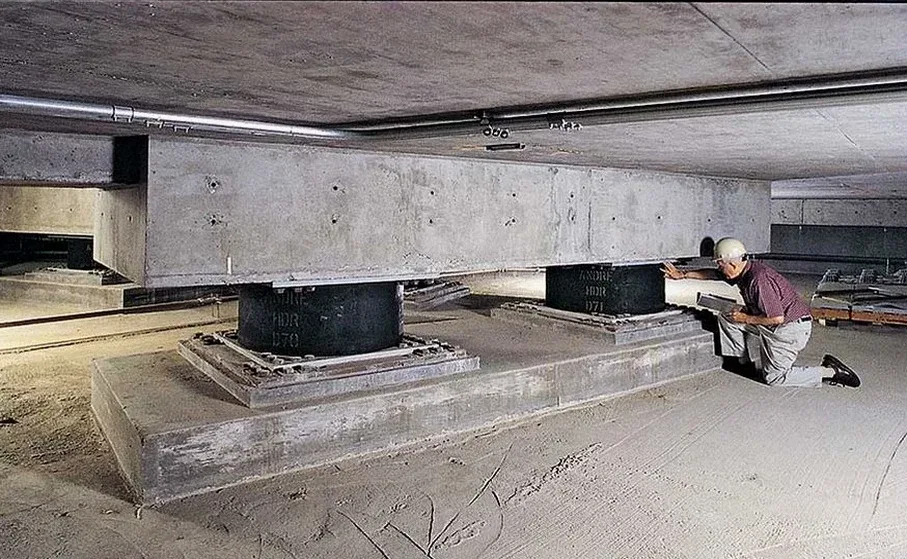
Tauranga’s rapid growth across the Rangitā Plains has placed thousands of new structures directly atop deep alluvial deposits and volcanic ash layers that amplify seismic motion. A standard fixed-base design here can transmit destructive ground accelerations straight into a building frame, yet base isolation seismic design decouples the superstructure from that movement entirely. The team regularly assesses isolator parameters against the variable stratigraphy between Matapihi and Papamoa, where the depth to firm ground shifts by over 15 metres within a few kilometres. This isn't a matter of applying a generic elastomeric bearing — it requires site-specific ground motion records matched to the 1987 Edgecumbe-type rupture scenarios NZS 1170.5 contemplates. Combining a seismic microzonation study with isolator prototyping ensures the isolation period lands outside the dominant site period, avoiding the resonance that damaged several Port of Tauranga structures in past events.
On Tauranga’s soft estuarine sediments, a properly tuned isolation system can cut base shear by a factor of four, but the plinth stiffness must account for the site’s specific stratigraphic impedance.