GEOTECHNICAL ENGINEERING1
TAURANGA
HomeUnderground ExcavationsGeotechnical analysis for soft soil tunnels

Geotechnical analysis for soft soil tunnels in Tauranga

Practical geotechnics, field-tested.

LEARN MORE

Tauranga's rapid expansion across the peninsula, where volcanic ash layers meet saturated alluvial deposits from the Wairoa River, creates a uniquely challenging environment for underground construction. With a population exceeding 160,000 and a marine subtropical climate delivering over 1,200 mm of annual rainfall, pore water pressures here are persistently high. Soft pumiceous silts and sensitive clays dictate that standard tunnel assumptions simply do not apply. The geotechnical analysis for soft soil tunnels must integrate high-resolution stratigraphic models because missing a loose tephra lens at invert level can cascade into face instability during excavation. We approach each project by mapping the spatial variability of these young, compressible soils before any alignment is finalised, ensuring the design reflects the ground’s actual behaviour rather than regional averages. When the alignment crosses reclaimed estuarine flats near the harbour, we often combine this with an in-situ permeability campaign to quantify groundwater inflow into the excavation face.

Stand-up time in Tauranga's sensitive pumiceous clays can drop below two hours when pore pressures spike after heavy rain, demanding real-time face mapping during tunnel advance.
Our service areas

Methodology and scope

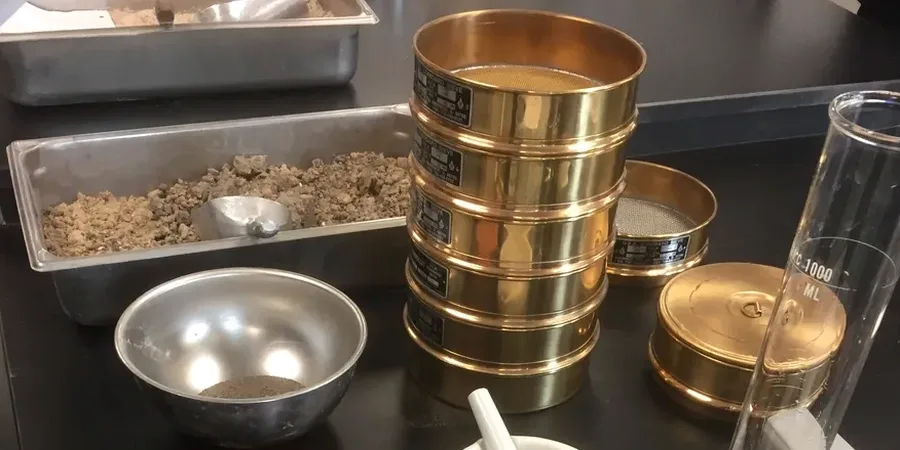
One recurring mistake we see in local tunnelling projects is treating the Matua Subgroup pyroclastics as uniform material, which leads to misjudging stand-up time and over-reliance on pre-cast segmental linings without adequate face support. The reality is these soils exhibit rapid strength loss upon remoulding, so the geotechnical analysis for soft soil tunnels requires a multi-phase investigation that captures undisturbed peak strength alongside residual parameters. We extract high-quality tube samples using thin-walled samplers and subject them to consolidated-undrained triaxial testing under back-pressures that match the in-situ hydrostatic conditions. The results feed directly into finite element models calibrated for the Mount Maunganui area. Complementing the laboratory program, we deploy CPT testing to resolve thin drainage layers within the alluvial sequence, because a continuous sand seam just 150 mm thick can alter the entire dewatering strategy and reduce face pressures by 20% or more. This level of detail prevents the classic over-design that inflates tender costs without adding safety.
Geotechnical analysis for soft soil tunnels in Tauranga
Technical reference — Tauranga

Local ground factors

NZS 4404:2010 provides the overarching framework for land development, but for soft ground tunnelling the NZGS guidelines on engineering geological models become the critical reference because they mandate a site-specific ground model that captures lateral heterogeneity. In Tauranga, the primary risk is not just face collapse but the potential for crown settlement propagating to the surface through the pumiceous silts that dominate the coastal terraces. A loss of ground of just 1.5% of tunnel diameter can translate into differential settlement exceeding 30 mm at street level, which threatens adjacent shallow footings and buried utilities along Cameron Road or The Strand. The geotechnical analysis for soft soil tunnels must therefore quantify the settlement trough width using Gaussian curve fitting calibrated to local case histories. We also assess the risk of hydrofracture during EPB operation because the low effective stress in these normally consolidated soils means the margin between face support pressure and blow-out is narrow, especially beneath the harbour margin where cover may be less than one diameter.

Need a geotechnical assessment?

Reply within 24h.

Email: contact@geotechnical-engineering1.co

Reference standards

NZS 4404:2010 Land Development and Subdivision Infrastructure, NZGS Guidelines for Engineering Geological Models, AS/NZS 1170.0:2002 Structural Design Actions – General Principles, Auckland Transport Code of Practice (tunnel-specific provisions)

Typical values

ParameterTypical value
Undrained shear strength (su)15–60 kPa (soft to firm)
Sensitivity (St)4–12 (moderate to highly sensitive)
Permeability (k)10⁻⁷ to 10⁻⁹ m/s (silty clay)
Plasticity Index (PI)18–42% (MH-CH per USCS)
Overconsolidation Ratio (OCR)1.5–3.2
Groundwater level (mbgl)0.8–3.5 m
Face support pressure range0.4–1.8 bar (EPB mode)

Quick answers

What is the typical cost range for a soft soil tunnel geotechnical analysis in Tauranga?

Depending on the alignment length and investigation depth, geotechnical analysis for soft soil tunnels in the Tauranga area typically ranges from NZ$7,640 to NZ$29,850. The final cost depends on the number of boreholes, CPT soundings, and the complexity of laboratory testing required to characterise the Matua Subgroup and alluvial units.

How do you handle the volcanic ash layers in the ground model?

We log the pumiceous tephra layers according to the NZGS guideline for soil and rock description, paying particular attention to crushability and water content. Because these layers can compress suddenly under tunnel face loading, we run oedometer tests at incremental loads up to 1.5 times the anticipated overburden pressure to capture the collapse potential.

Can you model tidal influence on pore pressure during tunnel excavation?

Yes, when the alignment passes within 200 metres of the harbour shoreline, we install vibrating wire piezometers at multiple depths and log data through at least one full spring-neap tidal cycle. The time-series feeds into a coupled flow-deformation model so the design accounts for the twice-daily fluctuation in effective stress at the face.

What parameters do you recommend for segmental lining design in Tauranga’s soft soils?

We provide a ground reaction curve based on the convergence-confinement method, using the small-strain stiffness from laboratory bender element tests. The recommended short-term lining pressure incorporates a bulking factor for the pumiceous silts, which tend to dilate slightly during shear, and we apply a long-term creep factor of 1.8 to 2.2 for the alluvial clays.

Location and service area

We serve projects in Tauranga and surrounding areas.

View larger map