GEOTECHNICAL ENGINEERING1
TAURANGA
HomeSlopes & WallsActive/passive anchor design

Active and Passive Anchor Systems in Tauranga's Volcanic and Alluvial Soils

Practical geotechnics, field-tested.

LEARN MORE

A recurring miscalculation in Tauranga’s hillside developments and waterfront projects is treating the weathered ignimbrite and loose pumice sands as a uniform mass for anchorage. The transition from the Matua Subgroup tuffs into the underlying alluvial deposits of the Tauranga Basin creates a bonded length environment that varies drastically over a few metres. An active/passive anchor design that relies on generic friction assumptions without a site-specific bond stress profile often leads to creep under service loads or, worse, a sudden tendon pull-out during proof testing. When the anchor head is locked off against a soldier pile wall along The Strand or a basement shoring system in the Mount Maunganui side, the post-tensioning forces must account for the relaxation characteristics of the local soils. A CPT test profile through these layers reveals the in-situ lateral stress and tip resistance needed to calibrate the load-transfer models, while a slope stability analysis quantifies the global factor of safety when the anchors are working to restrain a larger failure wedge in the sensitive Bay of Plenty terrain.

In Tauranga’s variable ground, the anchor bond length is not a geometric assumption but a hydraulic and mechanical parameter validated through on-site stressing against the CPT-derived soil behaviour type.
Our service areas

Methodology and scope

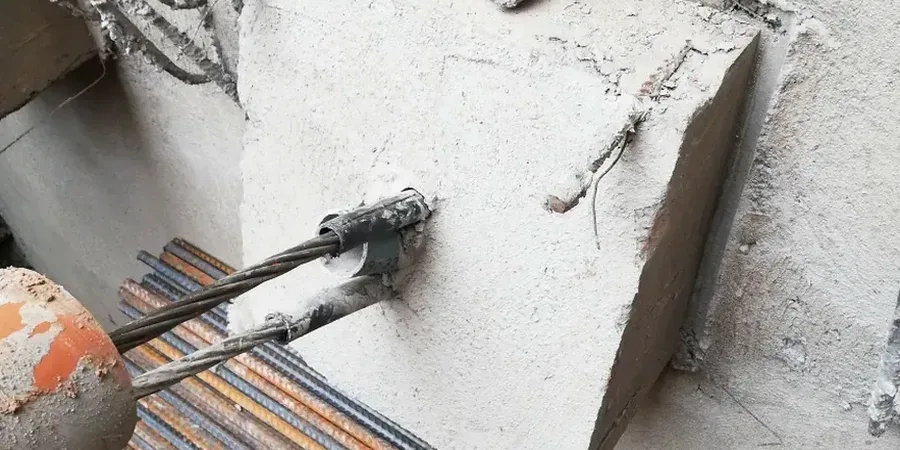
The NZS 3404 and NZGS guidelines for anchor design become particularly stringent in Tauranga due to the corrosive marine influence and the acidic residual soils derived from rhyolitic volcanics. A double corrosion protection system is rarely optional here; the tidal groundwater fluctuations in the Mount Maunganui spit and the aggressive sulphate content in the Papamoa ash layers demand a fully encapsulated tendon from the inner head to the grout-ground interface. The design differentiation between active and passive anchors dictates the construction sequence and the deformation response of the supported structure. Active anchors, stressed to 80% of ultimate tensile strength before excavation proceeds, control lateral movements in the sensitive estuarine clays encountered along the Wairoa River margins. Their free length is calculated to extend beyond the theoretical failure plane defined by the retaining wall geometry, ensuring the lock-off load is transferred deep into the undisturbed ignimbrite. Passive anchors, conversely, are only mobilized by ground displacement, making them suited for temporary rock bolt applications in the weathered rhyolite cuts of the Kaimai foothills. The load-displacement compatibility between the tendon and the grout column is verified through on-site suitability testing, where the apparent tendon free length is back-calculated from lift-off tests and compared to the design assumptions to detect any unintended debonding or necking in the grout body.
Active and Passive Anchor Systems in Tauranga's Volcanic and Alluvial Soils
Technical reference — Tauranga

Local ground factors

With a population exceeding 160,000 and a footprint that straddles both a dormant volcanic field and active coastal dune systems, Tauranga presents a unique anchor reliability challenge. The 1987 Edgecumbe earthquake, a M6.5 event felt strongly across the Bay of Plenty, demonstrated how the volcanic ash soils can amplify seismic waves and trigger slope instabilities. An active/passive anchor design that does not incorporate the post-cyclic degradation of bond strength in the pumice-rich horizons could fail during a long-duration subduction zone event along the Hikurangi margin. The risk is compounded when anchors are installed below the water table in the permeable Tauranga sands, where the installation process can induce piping erosion around the borehole if the flushing pressure is not carefully controlled. A comprehensive ground investigation that includes the assessment of the liquefaction potential of the loose marine sands ensures that the anchor load is not compromised by a loss of lateral confinement during a seismic event, preventing the catastrophic unzipping of a tied-back excavation wall.

Need a geotechnical assessment?

Reply within 24h.

Email: contact@geotechnical-engineering1.co

Reference standards

NZS 3404: Parts 1 & 2 – Steel Structures (anchor components), NZS 4203: General Structural Design and Design Loadings for Buildings, NZGS Guidelines for the Design and Testing of Ground Anchors, BS 8081: Code of Practice for Grouted Anchors (supplementary reference)

Typical values

ParameterTypical value
Tendon Type (Grade)Super strand 15.2 mm, fy ≥ 1670 MPa
Design LifeTemporary (< 2 years) / Permanent (≥ 50 years)
Corrosion Protection ClassDCP (encapsulated tendon + corrugated sheathing)
Grout UCS (min)30 MPa at 28 days, per NZS 3404
Bonded Length (min)3.0 m in rock / 4.0 m in pumiceous soils
Acceptance Criteria (Creep)Stabilization ≤ 2 mm over 60 min at proof load
Lock-off Load0.70 to 0.80 fpu (active); 0.0 (passive)

Quick answers

What ground investigation data is needed for a reliable anchor design in Tauranga?

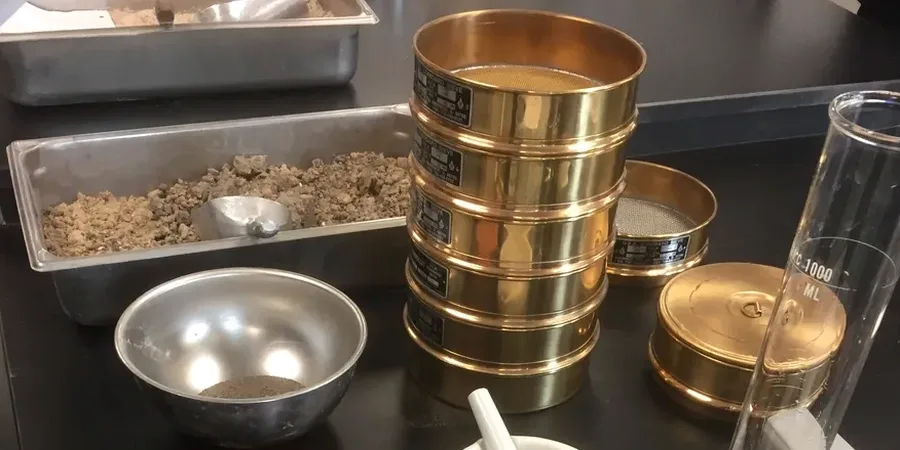
A proper design requires a CPT profile to at least 2 metres beyond the intended bond zone, combined with laboratory testing for pH, resistivity, and sulphate content of the soil and groundwater. In the Mount Maunganui area, the chloride content is a critical parameter for selecting the corrosion protection class. The undrained shear strength from the CPT also drives the bond stress estimation for the fixed length in the soft alluvial layers.

How do active and passive anchors differ in their load response?

Active anchors are tensioned and locked off before the excavation reaches its final depth, applying a pre-compression to the retained ground that limits subsequent lateral deformation. Passive anchors are only activated once the ground mass begins to move, making them a reaction-based system. In Tauranga’s sensitive estuarine clays, active systems are preferred to avoid the settlement associated with the ground movement needed to mobilize a passive restraint.

What is the typical acceptable creep rate during a proof test?

Per the NZGS guidelines, the creep stabilization criterion requires that the tendon displacement does not exceed 2 mm over a 60-minute observation period under the proof load, typically 1.33 times the design working load. In the pumiceous sands of Tauranga, the initial seating of the wedge plates during the lift-off test is subtracted from the measurement to isolate the true creep of the grout-ground interface.

Why is a double corrosion protection system necessary in Tauranga?

The high groundwater table, combined with the marine salts in the coastal strip and the acidic pH of the volcanic residual soils, creates a corrosion environment classified as aggressive to severe. A DCP system, with a corrugated plastic duct and controlled cement grout cover over the entire free and fixed length, is the standard for permanent anchors here to ensure a service life exceeding 50 years without tendon degradation.

What is the cost range for an active/passive anchor design package?

For a complete design package covering up to three anchor types with bond length calculations, corrosion protection specification, and the preparation of a testing schedule, the fee typically ranges from NZ$2,000 to NZ$6,930, depending on the number of anchor levels and the complexity of the ground profile interpretation required for the Tauranga site.

Location and service area

We serve projects in Tauranga and surrounding areas.

View larger map